MS Word References Tab
Advertisement
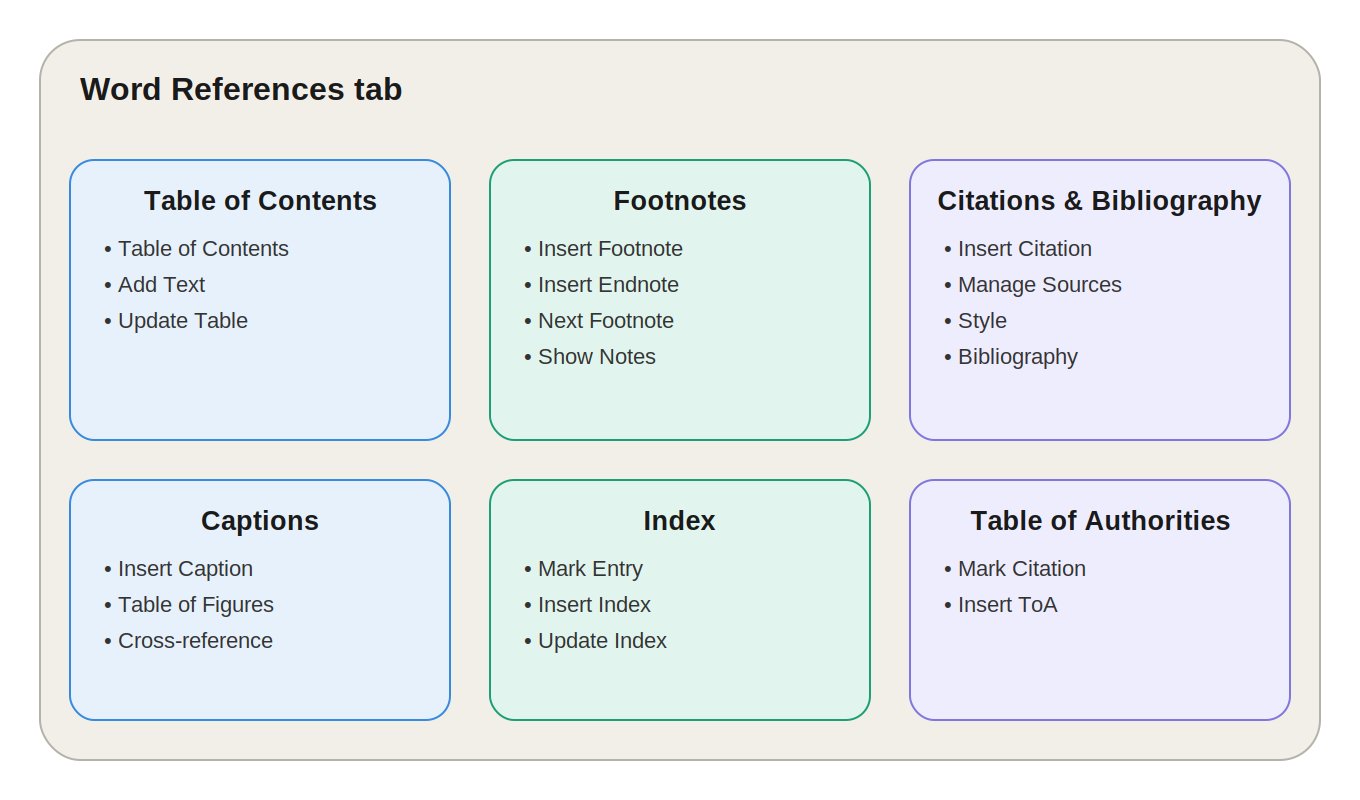
The References tab comes after Layout in Word's ribbon. It's built for long, structured documents — research papers, theses, reports, and legal documents — that need tables of contents, citations, footnotes, and indexes managed automatically instead of by hand.
It has six groups: Table of Contents, Footnotes, Citations & Bibliography, Captions, Index, and Table of Authorities.
1. Table of Contents Group
- Table of Contents – Automatically generates a clickable table of contents based on the Heading styles used in your document (Heading 1, Heading 2, etc.). Choose from built-in formats or a custom layout.
- Add Text – Marks the currently selected text to appear in the Table of Contents at a chosen heading level, without needing to apply a full heading style.
- Update Table – Refreshes the Table of Contents after you've added, removed, or reordered headings, so page numbers and entries stay accurate.
2. Footnotes Group
- Insert Footnote – Adds a numbered note at the bottom of the current page (Ctrl+Alt+F).
- Insert Endnote – Adds a numbered note at the very end of the document instead of the page.
- Next Footnote – Dropdown to jump between footnotes or endnotes in the document, or view the Notes Pane.
- Show Notes – Scrolls the document to display where footnotes/endnotes are located.
3. Citations & Bibliography Group
- Insert Citation – Adds an in-text citation from your source list, formatted automatically according to the selected style.
- Manage Sources – Opens a dialog to add, edit, or delete sources (books, websites, journal articles) used throughout the document.
- Style – Dropdown to select a citation format: APA, MLA, Chicago, IEEE, and several others.
- Bibliography – Automatically generates a formatted bibliography or works-cited page from all sources you've cited, matching your selected style.
4. Captions Group
- Insert Caption – Adds a numbered caption below (or above) an image, table, or figure (e.g., "Figure 1: Sales growth chart").
- Insert Table of Figures – Generates an automatic list of all figures/tables with their captions and page numbers, similar to a Table of Contents but for images and tables.
- Cross-reference – Inserts a reference to a captioned figure/table elsewhere in the document (e.g., "see Figure 3") that updates automatically if it moves.
5. Index Group
- Mark Entry – Flags a selected word or phrase to be included in the document's index (Alt+Shift+X).
- Insert Index – Generates an alphabetical index at the chosen location, listing all marked entries with their page numbers — commonly seen at the back of books and long manuals.
- Update Index – Refreshes the index after new entries are marked or content shifts pages.
6. Table of Authorities Group
- Mark Citation – Flags a legal citation (case, statute, rule) to be included in a Table of Authorities (Alt+Shift+I).
- Insert Table of Authorities – Generates a categorized list of all marked legal citations with page numbers — a standard requirement in legal briefs and filings.
When You'll Actually Use This Tab
- Table of Contents & Update Table – Any long document (reports, theses, manuals) organized with headings.
- Footnotes & Endnotes – Academic papers, historical writing, or any document needing source notes without cluttering the main text.
- Citations & Bibliography – Research papers and essays that require APA, MLA, or Chicago-style referencing.
- Captions & Table of Figures – Technical reports or theses with multiple charts, images, or tables that need to be indexed.
- Index – Long reference documents, manuals, or books needing a searchable back-of-book index.
- Table of Authorities – Legal documents and court filings citing cases, statutes, and regulations.
Advertisement
💬 Leave a Comment & Rating